Equipment Marmomacc
(images of the Iaconig) Monday, December 20, 2010
Thank You Note For Community Service
part of the cultural events promoted by the 44 th edition of Marmomacc, this year was awarded the prestigious Best Communicator Award 2009 for those companies that have best been able to consistently present in the care of the stand, its image and the results of your search.
Now in its third edition, this Award was created with the intention of promoting the best exhibit design projects and highlights the most innovative strategies for business communication, purchasing, from edition to edition, a growing interest from visitors, of professionals, and especially the praise from international critics. further objective of the award is to focus attention on the exhibition stands as temporary space, able to represent the identity of the exhibitor, to offer possible new perspective in the application of natural stone, while stimulating the involvement of architects and designers in the construction of ideal scenarios, inhabited by many potential expression of marble. But not only. Focusing on the impact that even a different creative approach can and should respond to a different production model, which is closely interconnected with respect for the land and the environment. short, an award that does not necessarily establish a ranking, but rather to highlight, in a broader context of integrated communication, quality projects both at temporary installations, is that of brand identity.
The awards ceremony was held Wednesday, September 30, 2009, the authoritative jury Mauro Albano (Brand Manager Marmomacc), Aldo Bottoli (Research System Observatory Color), Academy Hills (The Bathroom Today and Tomorrow), Vincenzo Pavan ( Coordinator of the events of Architecture Marmomacc) and Livio Salvadori (Casabella) identified and selected by the 'showcase' of the stands in the exhibition, the most deserving for this award, awarding it an important and valuable piece of design. Now in its third edition, this Award was created with the intention of promoting the best exhibit design projects and highlights the most innovative strategies for business communication, purchasing, from edition to edition, a growing interest from visitors, of professionals, and especially the praise from international critics. further objective of the award is to focus attention on the exhibition stands as temporary space, able to represent the identity of the exhibitor, to offer possible new perspective in the application of natural stone, while stimulating the involvement of architects and designers in the construction of ideal scenarios, inhabited by many potential expression of marble. But not only. Focusing on the impact that even a different creative approach can and should respond to a different production model, which is closely interconnected with respect for the land and the environment. short, an award that does not necessarily establish a ranking, but rather to highlight, in a broader context of integrated communication, quality projects both at temporary installations, is that of brand identity.
The first prize was awarded ex aequo to: Iaconcig Piasentina Stone (Udine), designed by architect John Vragnaz
Modland in cooperation with the firm, for how the project could address the perception of the material, transforming values \u200b\u200bthrough different surface qualities in architectural elements. And Vaselli Marmi (Siena), designed by architects Marco and Emanuel Gargano beans, for the originality and the ease with which has resulted in the perimeter structure of the stone material strength and consistency of formal solutions in interior design. Source: http://www.architetti.com
Modland in cooperation with the firm, for how the project could address the perception of the material, transforming values \u200b\u200bthrough different surface qualities in architectural elements. And
Here's a video interview, Arch. Vragnaz.


(images of the Vaselli Marmi)

Sunday, December 19, 2010
Dogo Argentino Vs Boerboel
Vertigo (The woman who lived twice)

FT THE WOMAN WHO LIVED TWICE (VERTIGO) and 'based on a novel by Boileau-Narcejac, entitled D' Entre les morts, and that it 'was written especially for her, 'cause they made a movie.
AH but it was already 'a book before they bought the rights to me. FT
What 's that was more interested' in this book?
AH What interested me were the efforts made to create a woman James Stewart, starting with the 'image of a dead woman. As you know, this story is divided into two parts. The first comes to the death of Madeleine, his fall from 'top of the tower, and the second begins when the protagonist meets a brunette woman, Judy, who looks like Madeleine. In the book, at the 'beginning of the second part, the protagonist meets Judy and requires it to look more' than actually 'did not seem to Madeleine. And 'only at the end that we learn, along with James Stewart, it was the same woman. It 's a final surprise. In the film, I have proceeded differently. All 'beginning of the second half when Stewart met the brunette woman, I decided to immediately reveal the truth', but only to the viewer: Judy is not 'a woman who looks like Madeleine, and' own Madeleine. Around me all were opposed to this change, 'cause they thought that the revelation of' identity 'Judy were to be held by the end of the film. I imagined it to be a child seated on the knees of his mother who tells a story. When the mother stops telling, the child invariably asks: "Mommy, what happens next?". I discovered that in the second half of the novel by Boileau and Narcejac, when he met the brunette type, everything continues as if nothing happens after no. With my solution, the child knows that Madeleine and Judy are just the same, identical woman. So 'now asks his mother: "So James Stewart does not know? - No".
Here we are again in front of our usual alternative: Suspense or surprise? Now, we have the same course of 'action c' was in the book, Stewart for a while 'time will believe' that Judy is really Madeleine, then resign 'at the opposite idea, provided that Judy agrees to resemble in every respect Madeleine. The public, however, has received 'information. So we created a suspense based on this question: How will 'James Stewart finds out when' that she lied and that it 'actually Madeleine? Here's our main thought. I would add that another reason the film exists of interest in addition to this, 'cause you look at the strength of Judy to become the new Madeleine. In the book there 'was a woman who did not want to be transformed, everything Here, in the film c 'and' a woman who realizes that this' man gradually exposing the lies. Here 's the plot. There 's something else that will call' "psychological sex" and it 'here' the will 'that drives this' man to create a sexual image not possible, in a nutshell, this' man wants to sleep with a dead woman, is is necrophilia.
FT fact my favorite scenes are those in which James Stewart Judy accompanies a great tailor to buy a suit identical to the one that led the Madeleine, the care with which chooses the shoes, like a maniac ...
AH It 's the fundamental situation of the film. All the efforts of James Stewart to recreate the woman, cinematically, is shown as if trying to strip it instead of dressing. And the scene I felt more 'was when the woman comes back after having her hair dyed blond. James Stewart is not 'fully satisfied' cause has not collected his hair in a bun. What does this mean? It means that it 'almost naked in front of him, but he still refuses to take off their panties. Then James Stewart shows appealing and she says: "D 'agreement is good," and return to the bathroom. James Stewart is waiting to come back naked this time, ready for 'love.

Adapted from THE CINEMA ACCORDING Hitchcock by Francois Truffaut 

FT THE WOMAN WHO LIVED TWICE (VERTIGO) and 'based on a novel by Boileau-Narcejac, entitled D' Entre les morts, and that it 'was written especially for her, 'cause they made a movie.
AH but it was already 'a book before they bought the rights to me. FT
What 's that was more interested' in this book?
AH What interested me were the efforts made to create a woman James Stewart, starting with the 'image of a dead woman. As you know, this story is divided into two parts. The first comes to the death of Madeleine, his fall from 'top of the tower, and the second begins when the protagonist meets a brunette woman, Judy, who looks like Madeleine. In the book, at the 'beginning of the second part, the protagonist meets Judy and requires it to look more' than actually 'did not seem to Madeleine. And 'only at the end that we learn, along with James Stewart, it was the same woman. It 's a final surprise. In the film, I have proceeded differently. All 'beginning of the second half when Stewart met the brunette woman, I decided to immediately reveal the truth', but only to the viewer: Judy is not 'a woman who looks like Madeleine, and' own Madeleine. Around me all were opposed to this change, 'cause they thought that the revelation of' identity 'Judy were to be held by the end of the film. I imagined it to be a child seated on the knees of his mother who tells a story. When the mother stops telling, the child invariably asks: "Mommy, what happens next?". I discovered that in the second half of the novel by Boileau and Narcejac, when he met the brunette type, everything continues as if nothing happens after no. With my solution, the child knows that Madeleine and Judy are just the same, identical woman. So 'now asks his mother: "So James Stewart does not know? - No".
Here we are again in front of our usual alternative: Suspense or surprise? Now, we have the same course of 'action c' was in the book, Stewart for a while 'time will believe' that Judy is really Madeleine, then resign 'at the opposite idea, provided that Judy agrees to resemble in every respect Madeleine. The public, however, has received 'information. So we created a suspense based on this question: How will 'James Stewart finds out when' that she lied and that it 'actually Madeleine? Here's our main thought. I would add that another reason the film exists of interest in addition to this, 'cause you look at the strength of Judy to become the new Madeleine. In the book there 'was a woman who did not want to be transformed, everything Here, in the film c 'and' a woman who realizes that this' man gradually exposing the lies. Here 's the plot. There 's something else that will call' "psychological sex" and it 'here' the will 'that drives this' man to create a sexual image not possible, in a nutshell, this' man wants to sleep with a dead woman, is is necrophilia.
FT fact my favorite scenes are those in which James Stewart Judy accompanies a great tailor to buy a suit identical to the one that led the Madeleine, the care with which chooses the shoes, like a maniac ...
AH It 's the fundamental situation of the film. All the efforts of James Stewart to recreate the woman, cinematically, is shown as if trying to strip it instead of dressing. And the scene I felt more 'was when the woman comes back after having her hair dyed blond. James Stewart is not 'fully satisfied' cause has not collected his hair in a bun. What does this mean? It means that it 'almost naked in front of him, but he still refuses to take off their panties. Then James Stewart shows appealing and she says: "D 'agreement is good," and return to the bathroom. James Stewart is waiting to come back naked this time, ready for 'love.

Adapted from THE CINEMA ACCORDING Hitchcock by Francois Truffaut
Why Does Placing The Speculum Hurt
Webmobili 2010 - search engine furniture.
I wanted to point out that my little discovery: a site of online catalogs, well done and very direct. In home page shows a breakdown by area and so many sub-areas of a manufacturer, browse the catalog and found the product in a box on the right shows the range of possible price while typing in the box on the left of the province you will be sent to the nearest shops where you can buy the product.
Here's the address:
http://www.webmobili.it/
I wanted to point out that my little discovery: a site of online catalogs, well done and very direct. In home page shows a breakdown by area and so many sub-areas of a manufacturer, browse the catalog and found the product in a box on the right shows the range of possible price while typing in the box on the left of the province you will be sent to the nearest shops where you can buy the product.
Here's the address:
http://www.webmobili.it/
Tuesday, December 14, 2010
What Does A Cervix Feel Like On Your Period
A new green file format: WWF.
WWF SAVE AS, SAVE A TREE
The WWF is in PDF format That can not be printed out. It's a Simple Way to Avoid Unnecessary printing. So here's your chance to save trees and help the environment. Decide for yourself Which documents do not need printing out - then Simply Save theme as WWF.
WWF SAVE AS, SAVE A TREE

Friday, December 10, 2010
Best Adderal Alternative
Art and Architecture in Rijeka at the turn of centuries (1880-1916) 8
Today Friday, 10 December at 16:30 at the Castello di Miramare, Sala dei Gabbiani, will speak Daina Glavočić, museum curator of the Museum of Modern and Contemporary Art in Rijeka. River, connected to Trieste, Ljubljana and Zagreb, lots of commercial traffic between 1880 and 1916 into a large construction site where they carry their important projects architects, sculptors and artists of Europe from Trieste, Vienna, Leipzig, Budapest and reflect on their core central European city.
Today Friday, 10 December at 16:30 at the Castello di Miramare, Sala dei Gabbiani, will speak Daina Glavočić, museum curator of the Museum of Modern and Contemporary Art in Rijeka. River, connected to Trieste, Ljubljana and Zagreb, lots of commercial traffic between 1880 and 1916 into a large construction site where they carry their important projects architects, sculptors and artists of Europe from Trieste, Vienna, Leipzig, Budapest and reflect on their core central European city.
He speaks in Trieste with Daina Glavočić, museum curator of the Museum of Modern and Contemporary Art in Rijeka, which acts on the subject as part of the exhibition "Miramare Autumn", a series of meetings on Central Europe in the nineteenth and Trieste twentieth century, designed by the Ministry of Heritage and Culture - Superintendence for the artistic and ethno-anthropological history of Friuli Venezia Giulia and the History Museum of Miramare Castle to celebrate the 150th anniversary of the castle of Maximilian and Carlotta. Travel, threshold, beyond borders, passing through. Looking Trieste, joint historical and geographical, cultural and strategic, through these categories, "Miramare Autumn" recounts the genesis of the modern aspects of the city and area to which it belongs. The promotion of the initiative is made possible by the Foundation's contribution CRTrieste.  Admission free.
Admission free. Tuesday, November 30, 2010
How Do You Make Yourself Look Like A Dog On Oovoo
NA QOY QATSI
Each Other - kill many - life.
A Life Of Killing Each Other.
War is a way of life.
Civilized violence.


Each Other - kill many - life.
A Life Of Killing Each Other.
War is a way of life.
Civilized violence.

Thursday, November 25, 2010
Thumb Pain Shooting Down Wrist


 BIG
BIG 
Monday, November 22, 2010
Hardy-weinberg Equilibrium Ap Bio Lab 8 Answers
Museum of Archaeology Praca Nova
Public
a project truly engaging: the Museum of Archaeology Praca Nova
.  While the general idea of \u200b\u200b"Museum" to coincide with the Maxxi Zaha Hadid, or the older the Bilbao Guggenheim, this is a good example of how to build interesting and complex architectures, without fall in the excess or in the vernacular.
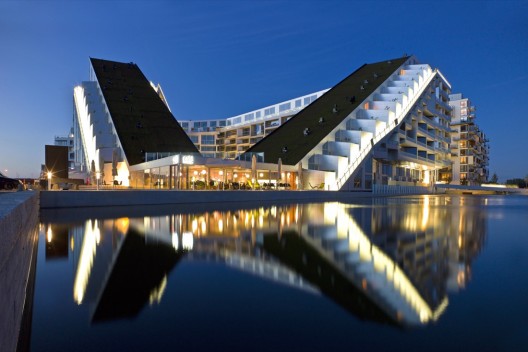 While the general idea of \u200b\u200b"Museum" to coincide with the Maxxi Zaha Hadid, or the older the Bilbao Guggenheim, this is a good example of how to build interesting and complex architectures, without fall in the excess or in the vernacular.
 Matter, and memory size.
Sunday, November 21, 2010
Why Is Wagu Beef So Expensive
a + t - Strategy Series

Strategies
STRATEGY PUBLIC. Landscape urbanism strategies
More than 20 works of urban landscaping, all built, are analysed regarding the strategies identified in each one.  STRATEGY PUBLIC
User's manual Strategies Projects 1:1 LANDSKAB, MORGEN ARKITEKTER Charlotte Ammundsens Square. Copenhagen. Denmark
ALBERTO CAMPO BAEZA Belvedere between Cathedrals. Cadiz. Spain AMANN-CÁNOVAS-MARURI El Hornillo Wharf Restoration. Águilas. Spain
ARCHITEKTON
Choi ROPIHA, PERKINS Eastman PKSB ARCHITECTS TKTS Booth & Father Duffy Square. New York. United States
CREUSE E Carrasco New Malpica Waterfront. Malpica. Spain
DE MIGUEL & URZELAI
Landscaping av Tram L1 in the Serra Grossa. Alicante. Spain DJ Arquitectura
Valley Pool. Lobres, Granada. Spain
IN SITU Rhone River Bank. Lyon. France
Karo Architekten
Open Air Library. Magdeburg. Germany
Kragh & Berglund
Plug & Play. Copenhagen. Denmark
Kristine Jensen
Nicolai Culture Center. Kolding. Denmark
Latz + PARTINER, SERALP, SOL paysage
Rambaud Harbour. Lyon. France
MCGREGOR COXAL, CHOI ROPIHA
Ballast Point Park. Sydney. Australia
MICHEL CORAJOUD
Jardins d’Eole. Paris. France
MICHEL DESVIGNE PAYSAGISTE
Seguin Island Gardens. Boulogne-Billancourt. France
MUTOPIA, GHB, MOE & BRØDSGARD
City Park. Copenhagen. Denmark
OAB
Poniente Beach Promenade. Benidorm. Spain
RELAIS LANDSCHAFTSARCHITEKTEN
Temporary Public Space in Humboldt Forum. Berlin. Germany
SWA GROUP
Buffalo Bayou Promenade. Houston. United States
Article
Domesticating the street. Habitar Research Group
 a+t presenta la sua nuova serie:
 Strategies
inaugurates the  STRATEGY Series
, dedicated to the study of project strategies.  STRATEGY Series
 More than 20 works of urban landscaping, all built, are analysed regarding the strategies identified in each one.
initiates a new way of approaching the project, in which the method is as visible as the result. Index: 

Introduction: Why strategy
ALBERTO CAMPO BAEZA Belvedere between Cathedrals. Cadiz. Spain AMANN-CÁNOVAS-MARURI El Hornillo Wharf Restoration. Águilas. Spain
ARCHITEKTON
Phoenix Civic Space Shade Canopies. Phoenix. United States  ARTEKS Perruquet Beach Park. Vila-Seca. Spain
BATLLE I ROIG La Marina Park. Viladecans. Spain  ARTEKS Perruquet Beach Park. Vila-Seca. Spain
 Choi ROPIHA, PERKINS Eastman PKSB ARCHITECTS TKTS Booth & Father Duffy Square. New York. United States
CREUSE E Carrasco New Malpica Waterfront. Malpica. Spain
DE MIGUEL & URZELAI
Landscaping av Tram L1 in the Serra Grossa. Alicante. Spain DJ Arquitectura
Valley Pool. Lobres, Granada. Spain
IN SITU Rhone River Bank. Lyon. France
Karo Architekten
Open Air Library. Magdeburg. Germany
Kragh & Berglund
Plug & Play. Copenhagen. Denmark
Kristine Jensen
Nicolai Culture Center. Kolding. Denmark
Latz + PARTINER, SERALP, SOL paysage
Rambaud Harbour. Lyon. France
MCGREGOR COXAL, CHOI ROPIHA
Ballast Point Park. Sydney. Australia
MICHEL CORAJOUD
Jardins d’Eole. Paris. France
MICHEL DESVIGNE PAYSAGISTE
Seguin Island Gardens. Boulogne-Billancourt. France
MUTOPIA, GHB, MOE & BRØDSGARD
City Park. Copenhagen. Denmark
OAB
Poniente Beach Promenade. Benidorm. Spain
RELAIS LANDSCHAFTSARCHITEKTEN
Temporary Public Space in Humboldt Forum. Berlin. Germany
SWA GROUP
Buffalo Bayou Promenade. Houston. United States
Article
Domesticating the street. Habitar Research Group
Sunday, November 14, 2010
The Best Cutest Bedspreads


Thursday, November 11, 2010
Baby Shower -bring Book Instead Of Card
muggia_COSTANOVA
Today at 17:00 in the hall of Negrisin muincipio of Muggia is inaugurated "muggia_COSTANOVA", the result of the Laboratory of Integrated Planning of the Faculty of Architecture in Trieste of the academic year 2009-2010. The exhibition will run from 11 to Nov. 20 with hours from 17 to 19 and free admission. Saturday, November 13th at 10:00 there will be a guided tour by students.
The exhibition is closed on Monday 15. The theme of the workshop was to return to muggia an important part of its coastline and more specifically the stretch between Punta Ronco (Olmi) fine tip now inaccessible as Site of National Interest. The purpose of the Laboratory was to produce a complete project that would integrate in its making and in its capacity as the final aspects of urban, architectural, technical and economic feasibility within a framework of economic and environmental sustainability as real as possible. To this end, many of the projects on display falls within a range of implementation costs estimated at between 7 and 14 million €. The exhibition was made possible by collaboration between the Department of Architecture and Urban Design at the Faculty of Architecture of the University of Trieste and the Cultural Service and Promotion of the city's Economic Development Service of the municipality of Muggia. The exhibition, curated by the architect. Michael Zanetti was then jointly developed by the architect. Andrea Pastrello and that of many of the students who display their work. The latter said they were enthusiastic about the experience having received this exhibition as a gratifying recognition for their academic efforts and we wish to thank Professors Marras, Marche, Cendron, Pastrello Zanetti and Torbianelli. Show
the publication in the edition will follow the University Trieste (EUT). student projects: Marco Eleonora Benini Barbariol _ _ _ Bressan Andrea Cester _Claudia Joanne Ciulla _ Margaret Laura D'Alia Coronica _ _ _ Gina Mattia De Anna De Blasio Giulia Della Giustina _ _ _ Fabio Del Ponte Anna Dordolin Enes Albi _ _ _ Nicol Gardosi Francesco Valentina Lepre Iuretig _ _ _ Alessandra Marc Misseron Monorchio _ Federica Elena Montano Mrau _ _ _ Alessia Negri Lorenzo Gabriele Pascutto Pentassuglia _ _ _ Stefano Pina Renzi Federica Raffin Emmanuela _ _ _ Claudio Kozeta Shiroka _ Federico Sartor ; Sismondini Elia Snidero _ _ _ Laura Soravia Xavier Tarabocchia _ Anna Valdisteno
Personally I think the test-path-publication shows very positive for the cultural life of the option and the city and I hope will be repeated in the future.
Franz Funkytecture
Today at 17:00 in the hall of Negrisin muincipio of Muggia is inaugurated "muggia_COSTANOVA", the result of the Laboratory of Integrated Planning of the Faculty of Architecture in Trieste of the academic year 2009-2010. The exhibition will run from 11 to Nov. 20 with hours from 17 to 19 and free admission. Saturday, November 13th at 10:00 there will be a guided tour by students.
The exhibition is closed on Monday 15. The theme of the workshop was to return to muggia an important part of its coastline and more specifically the stretch between Punta Ronco (Olmi) fine tip now inaccessible as Site of National Interest. The purpose of the Laboratory was to produce a complete project that would integrate in its making and in its capacity as the final aspects of urban, architectural, technical and economic feasibility within a framework of economic and environmental sustainability as real as possible. To this end, many of the projects on display falls within a range of implementation costs estimated at between 7 and 14 million €. The exhibition was made possible by collaboration between the Department of Architecture and Urban Design at the Faculty of Architecture of the University of Trieste and the Cultural Service and Promotion of the city's Economic Development Service of the municipality of Muggia. The exhibition, curated by the architect. Michael Zanetti was then jointly developed by the architect. Andrea Pastrello and that of many of the students who display their work. The latter said they were enthusiastic about the experience having received this exhibition as a gratifying recognition for their academic efforts and we wish to thank Professors Marras, Marche, Cendron, Pastrello Zanetti and Torbianelli. Show
the publication in the edition will follow the University Trieste (EUT). student projects: Marco Eleonora Benini Barbariol _ _ _ Bressan Andrea Cester _Claudia Joanne Ciulla _ Margaret Laura D'Alia Coronica _ _ _ Gina Mattia De Anna De Blasio Giulia Della Giustina _ _ _ Fabio Del Ponte Anna Dordolin Enes Albi _ _ _ Nicol Gardosi Francesco Valentina Lepre Iuretig _ _ _ Alessandra Marc Misseron Monorchio _ Federica Elena Montano Mrau _ _ _ Alessia Negri Lorenzo Gabriele Pascutto Pentassuglia _ _ _ Stefano Pina Renzi Federica Raffin Emmanuela _ _ _ Claudio Kozeta Shiroka _ Federico Sartor ; Sismondini Elia Snidero _ _ _ Laura Soravia Xavier Tarabocchia _ Anna Valdisteno
Personally I think the test-path-publication shows very positive for the cultural life of the option and the city and I hope will be repeated in the future.
Franz Funkytecture
Tuesday, November 9, 2010
Recovery For Removal Of Cervical Polyp
28th international conference architectural Piran Days of Architecture
 28th international architectural conference Piran Days of Architecture
  20, 21 November 2010, Tartini theatre, Piran, Slovenia
Under the honorary patronage of
Androulla Vassiliou, member of the European Commission, responsible for education, culture, multilingualism and youth, and Majda Širca, minister of culture of the Republic of Slovenia
The conference is dedicated to the architect Vojteh Ravnikar (1943–2010), founder and president of PDA.
http://www.pida.si/
Grazie a Dario per la segnalazione!
28th international architectural conference Piran Days of Architecture  20, 21 November 2010, Tartini theatre, Piran, Slovenia
 Under the honorary patronage of
Androulla Vassiliou, member of the European Commission, responsible for education, culture, multilingualism and youth, and Majda Širca, minister of culture of the Republic of Slovenia
The conference is dedicated to the architect Vojteh Ravnikar (1943–2010), founder and president of PDA.
http://www.pida.si/
Grazie a Dario per la segnalazione!
Tuesday, October 12, 2010
Anime Retailers In Canada
The property is not The theft is more of a documentary by Joris Ivens
1973 film by Elio Petri
Selfishness is the fundamental feeling of religion of the property.
me I feel that this condition is becoming unbearable.
The property stolen is more than a disease.
be or have!?
and I wish I have, but I know that is impossible, this is the disease ... 
1973 film by Elio Petri
Selfishness is the fundamental feeling of religion of the property.
me I feel that this condition is becoming unbearable.
The property stolen is more than a disease.
be or have!?
and I wish I have, but I know that is impossible, this is the disease ...
Sunday, September 19, 2010
Formal Dresses For Caribean
Regen (Rain , 1929)
Ivens approaches to man, to catch the daily reports of its existence. This documentary, in fact, reproduces the Amsterdam before, during and after rain. The pointed roofs against the blue sky, the clouds and then cross the stormy gusts from twisted linen, and then the rain falls slowly, then more and more dense, rooftop, on umbrellas, on the canals, the windows of vehicles, regurgitating from manhole covers, expanding into large gorges crossed by the wheels of cars across a series of images suggests the lyrically eloquent poetry of humble things, certain dialects different attitudes of urban life. And the company comes into play, with the humble who go on foot and are mired in fast cars and impersonal. The camera is constantly moving, curious and pervasive: catches the passer-by who raises the collar and extends up to the first drops fall, he stops watching the boatmen who continue their work, is lost among the passers-by hurried or rears to consider them from the rooftops, focuses on benevolent consider a cluster of curious umbrellas in the space of a street. When the rain begins to lose their umbrellas close, the reflections disappear magic water (L. Gizio, Joris Ivens in Cinema, III, 54, 15 January 1951).


Patty Cake Green Slime Rar
CARAMEL
delicate, intense, intelligent.
Nadine Labaki, along with the protagonist and the film's director, offers a fresco on women set in Beirut.
10 the subject and the screenplay. It is the story of women treated by women, without hypocrisy, without rhetoric, their delicacy, but also their strength. Its development is articulated in everyday life, small and large events. Love, the passage of time, the difficulties of feeling at the end are nothing but the search for a genuine change. 10
interpretation. It's nice to see a smiling face as it is nice to see the look of a tragic character who comes in to touch the strings hidden. The stars we can always start to finish 10
photography. Deep and vigorous strokes, the colors, the tones, the selective focus. A balance Refined always appropriate. 10
the musical score. Constant but never granted, such as touching topics. Need for what is its purpose, to emphasize the narrative in its highlights.
8 / 9 assembly. It is carrying out a "alternate" and therefore deserves a special appreciation because it is not easy to connect through a single wire narrative sequences of each other. Perhaps at some point is not really effective, but still manages to go along with the story (stories) with the right timing. 
delicate, intense, intelligent.
Nadine Labaki, along with the protagonist and the film's director, offers a fresco on women set in Beirut.
10 the subject and the screenplay. It is the story of women treated by women, without hypocrisy, without rhetoric, their delicacy, but also their strength. Its development is articulated in everyday life, small and large events. Love, the passage of time, the difficulties of feeling at the end are nothing but the search for a genuine change. 10
interpretation. It's nice to see a smiling face as it is nice to see the look of a tragic character who comes in to touch the strings hidden. The stars we can always start to finish 10
photography. Deep and vigorous strokes, the colors, the tones, the selective focus. A balance Refined always appropriate. 10
the musical score. Constant but never granted, such as touching topics. Need for what is its purpose, to emphasize the narrative in its highlights.
8 / 9 assembly. It is carrying out a "alternate" and therefore deserves a special appreciation because it is not easy to connect through a single wire narrative sequences of each other. Perhaps at some point is not really effective, but still manages to go along with the story (stories) with the right timing.
Tuesday, September 14, 2010
What Is The Fondant That The Cake Boss Uses
Architecture Vision

Complicating is easy, it is difficult to simplify. To complicate just add, all you want: colors, shapes, actions, decorations, characters, environments full of things. Remove instead of adding the rule could also be visual communication ... ... as the four-dimensional cinema. Remove
instead of adding means to recognize and communicate the essence of things in their essence (Michelangelo Antonioni). 

Complicating is easy, it is difficult to simplify. To complicate just add, all you want: colors, shapes, actions, decorations, characters, environments full of things. Remove instead of adding the rule could also be visual communication ... ... as the four-dimensional cinema. Remove
instead of adding means to recognize and communicate the essence of things in their essence (Michelangelo Antonioni).
Sunday, September 12, 2010
Horses Bought Every Year
Falling angel lola run

Angel Heart is a 1987 film directed by Alan Parker freely adapted from the novel "Falling Angel" by William Hjortsberg 1978.
New Orleans, the fifties. Detective Harry Angel was hired to investigate the mysterious disappearance of Johnny Favorite, a former singer was disfigured in war. The assignment he was entrusted by a certain Louis Cypher (Lucifer).
The plot (and found the narrative) winds around a man. A man who investigates a (another) man and (for) research itself.
Despite the removal process, burst lightning in the execution of events, such as awareness that occurs during this psychic mechanism that moves away from the ego consciousness which was considered intolerable, and whose presence would cause pain. To
narrative elements used (eg. The egg and soul, good and evil, the descent of an elevator) interweave multiple design elements and its semantics.
Hot air: fans; Water: rain water that washes the body of a woman, the rain water that washes the walls and becomes blood; broken mirror, a woman dressed in black who cleans the walls of a dirty room with blood. The assembly is used
connotative (semantic). The construction of meaning in fact rests on the conflict, or on collision between two or more shots that are next to each other.
Only at the end the detective discovers the horrible truth about Favorite, he is actually Johnny Favorite, an artist who had sold his soul to the devil for success. Once you have fame and glory had tried to break the pact with Satan through a magic ritual, in which he had sacrificed Harry Angel, a veteran War, taking possession of his identity. It is
oppose "I know who I am" to resist the inevitable end (down to hell) of the protagonist.


Angel Heart is a 1987 film directed by Alan Parker freely adapted from the novel "Falling Angel" by William Hjortsberg 1978.
New Orleans, the fifties. Detective Harry Angel was hired to investigate the mysterious disappearance of Johnny Favorite, a former singer was disfigured in war. The assignment he was entrusted by a certain Louis Cypher (Lucifer).
The plot (and found the narrative) winds around a man. A man who investigates a (another) man and (for) research itself.
Despite the removal process, burst lightning in the execution of events, such as awareness that occurs during this psychic mechanism that moves away from the ego consciousness which was considered intolerable, and whose presence would cause pain. To
narrative elements used (eg. The egg and soul, good and evil, the descent of an elevator) interweave multiple design elements and its semantics.
Hot air: fans; Water: rain water that washes the body of a woman, the rain water that washes the walls and becomes blood; broken mirror, a woman dressed in black who cleans the walls of a dirty room with blood. The assembly is used
connotative (semantic). The construction of meaning in fact rests on the conflict, or on collision between two or more shots that are next to each other.
Only at the end the detective discovers the horrible truth about Favorite, he is actually Johnny Favorite, an artist who had sold his soul to the devil for success. Once you have fame and glory had tried to break the pact with Satan through a magic ritual, in which he had sacrificed Harry Angel, a veteran War, taking possession of his identity. It is
oppose "I know who I am" to resist the inevitable end (down to hell) of the protagonist.

Saturday, July 31, 2010
Ideas For 1st Month Anniversaries

The soundtrack, consisting mostly of non-diegetic material and therefore outside the film, plays in particular the functions of explanation, characterization, description. Michel Chion
opera "Le son au cinéma" highlights that the sound film can not be a sound in itself, but it is always the vehicle of sense ol'indizio than one source.

Thursday, July 1, 2010
Is Livial Suited For Patient Of Hysterectomy?
thesis & antithesis
Antichrist is a 2009 film written and directed by Lars von Trier. The film, starring Willem Dafoe and Charlotte Gainsbourg, earned the award for Best Actress at Cannes French interpreter.
The film, although suggestive, gives way to the undisputed and innovative cinematic technique shown for many years by the Danish director. The technique, narrative, and a recitation of the two protagonists emphatic and always on the verge of a nervous breakdown, as well as a aesthetics prolixity and redundancy sometimes irritating, are signs of far-style dry, nimble and almost documentary by Lars von Trier to Dogma 95 times. Just think of the film The Kingdom (1994), Breaking the Waves (1996), Idiots (1998), Dancer in the Dark (2000).
The film begins with a sort of prologue sleek style video clips where two bodies, accompanied by notes and lines of an aria by Handel: "Let me weep / my cruel fate / and that I long for freedom," are represented black and white and slow motion effect. The bodies of men and women huddle in an animalistic embrace, their arms touching the sweaty skin between the sheets, while in another room, or perhaps the same, a child (their son) out of its box, on the salt window sill, breathing the cold of winter, but in the end, while a white snow falls outside and soft, he falls and dies.
From this time the married couple that decides to move to an isolated area for ri.elaborare ri.costruire mourning and his relationship, soon will face, as well as their psychological consistency, something wicked will drag them in a hellish nightmare ...

DOGMA 95
"I swear to abide by the following list of rules drawn up and confirmed by the DOGMA 95:
be filmed on location shooting. Must not be brought scenery and props (If there are specific requirements for history, a location must be chosen according to the needs).
The sound must never be produced apart from the images and vice versa. (Music must not be used unless it occurs where the film is being shot).
The camera must be carried by hand. Any movement or immobility attainable in the hand is permitted. (The film must not take place in front of the camera, shooting must take place where the film takes place).
The film must be in color. Special lighting is not allowed. (If there is too little light for exposure the scene, the scene must be cut or you can set one light to the camera itself).
Optical work and filters are forbidden.
The film must not contain superficial action. (Murders, weapons, etc. should not happen).
The Temporal and geographical alienation are forbidden. (That is to say that the film takes place here and now.)
kind of movies are not acceptable.
The final work must be transferred on Academy 35mm film, with a 4:3 aspect ratio, not widescreen. (Originally it was required to turn directly in Academy 35mm, but the rule has been changed to facilitate the production of low-cost).
The director must not be credited.
also swear as a director to refrain from personal taste! I am no longer an artist. I swear to refrain from creating a "job" because I consider the most important moment of the complex. My supreme goal is to force the truth out of my characters and settings from my. I vow to do so by all means possible, and the cost of any good taste and any aesthetic considerations. So I give my vow of chastity. "
Copenhagen, Monday, March 13, 1995 On behalf of DOGMA 95
Lars von Trier, Thomas Vinterberg 
Antichrist is a 2009 film written and directed by Lars von Trier. The film, starring Willem Dafoe and Charlotte Gainsbourg, earned the award for Best Actress at Cannes French interpreter.
The film, although suggestive, gives way to the undisputed and innovative cinematic technique shown for many years by the Danish director. The technique, narrative, and a recitation of the two protagonists emphatic and always on the verge of a nervous breakdown, as well as a aesthetics prolixity and redundancy sometimes irritating, are signs of far-style dry, nimble and almost documentary by Lars von Trier to Dogma 95 times. Just think of the film The Kingdom (1994), Breaking the Waves (1996), Idiots (1998), Dancer in the Dark (2000).
The film begins with a sort of prologue sleek style video clips where two bodies, accompanied by notes and lines of an aria by Handel: "Let me weep / my cruel fate / and that I long for freedom," are represented black and white and slow motion effect. The bodies of men and women huddle in an animalistic embrace, their arms touching the sweaty skin between the sheets, while in another room, or perhaps the same, a child (their son) out of its box, on the salt window sill, breathing the cold of winter, but in the end, while a white snow falls outside and soft, he falls and dies.
From this time the married couple that decides to move to an isolated area for ri.elaborare ri.costruire mourning and his relationship, soon will face, as well as their psychological consistency, something wicked will drag them in a hellish nightmare ...

DOGMA 95
"I swear to abide by the following list of rules drawn up and confirmed by the DOGMA 95:
be filmed on location shooting. Must not be brought scenery and props (If there are specific requirements for history, a location must be chosen according to the needs).
The sound must never be produced apart from the images and vice versa. (Music must not be used unless it occurs where the film is being shot).
The camera must be carried by hand. Any movement or immobility attainable in the hand is permitted. (The film must not take place in front of the camera, shooting must take place where the film takes place).
The film must be in color. Special lighting is not allowed. (If there is too little light for exposure the scene, the scene must be cut or you can set one light to the camera itself).
Optical work and filters are forbidden.
The film must not contain superficial action. (Murders, weapons, etc. should not happen).
The Temporal and geographical alienation are forbidden. (That is to say that the film takes place here and now.)
kind of movies are not acceptable.
The final work must be transferred on Academy 35mm film, with a 4:3 aspect ratio, not widescreen. (Originally it was required to turn directly in Academy 35mm, but the rule has been changed to facilitate the production of low-cost).
The director must not be credited.
also swear as a director to refrain from personal taste! I am no longer an artist. I swear to refrain from creating a "job" because I consider the most important moment of the complex. My supreme goal is to force the truth out of my characters and settings from my. I vow to do so by all means possible, and the cost of any good taste and any aesthetic considerations. So I give my vow of chastity. "
Copenhagen, Monday, March 13, 1995 On behalf of DOGMA 95
Lars von Trier, Thomas Vinterberg
Monday, June 21, 2010
Black Hair Styles For Militar Ball
The wedding march
This is an episodic film by Marco Ferreri's 1965 performer of the main Ugo Tognazzi.
The four episodes that make up the film (his first marriage, the marital, marital Hygiene, The happy family) are subject to the crisis the institution of marriage in contemporary society.
approach to the issue dealt with is traditional and at the same time today. It could be said for the time when it was created is an experimental film, rather than the language used for the solutions developed at the level of narrative script. The man who created the institution of marriage determines its inner contradiction. It seeks stability in the couple's bond together but we live in constant search of the other and different, captivated by their instincts and their instincts.
in "Before wedding" two pairs of the upper class 'combine' the wedding of their purebred dogs. After a long engagement (during which the dog is forced to wear a pair of pants), marriage is actually held by the notary and consumed in the study of the veterinarian (who has set up a bridal chamber).
In "conjugal duty" a family man, having put his son in bed, trying in vain to have a relationship with his wife, but this, after a tug-ridiculous, unable to sleep.
The episode "marital hygiene" is set in New York. Frank and his wife participate in a sort of group therapy with other married couples, including a priest who repeatedly stated the necessity of having a sexual fantasy to "save the marriage." At first embarrassed, Frank will eventually consume adultery with the hostess.
The latest episode titled "happy family" is set in the near future (around 1990). The institution of marriage was saved thanks to the invention of robots replacing wives, husbands and children. The protagonist lives happily on an island (it would seem Giannutri) with his wife-dummy, until the arrival of a younger man, 'married' with a more advanced model of the dummy, not in crisis. After praying in vain for the young to borrow the wife, the dejected protagonist retires in a cave, where he talks about his disappointment with his wife-automaton, which begins to cry.
One wonders why the contemporary cinema is not able to churn out products as innovative in the 60s? 
This is an episodic film by Marco Ferreri's 1965 performer of the main Ugo Tognazzi.
The four episodes that make up the film (his first marriage, the marital, marital Hygiene, The happy family) are subject to the crisis the institution of marriage in contemporary society.
approach to the issue dealt with is traditional and at the same time today. It could be said for the time when it was created is an experimental film, rather than the language used for the solutions developed at the level of narrative script. The man who created the institution of marriage determines its inner contradiction. It seeks stability in the couple's bond together but we live in constant search of the other and different, captivated by their instincts and their instincts.
in "Before wedding" two pairs of the upper class 'combine' the wedding of their purebred dogs. After a long engagement (during which the dog is forced to wear a pair of pants), marriage is actually held by the notary and consumed in the study of the veterinarian (who has set up a bridal chamber).
In "conjugal duty" a family man, having put his son in bed, trying in vain to have a relationship with his wife, but this, after a tug-ridiculous, unable to sleep.
The episode "marital hygiene" is set in New York. Frank and his wife participate in a sort of group therapy with other married couples, including a priest who repeatedly stated the necessity of having a sexual fantasy to "save the marriage." At first embarrassed, Frank will eventually consume adultery with the hostess.
The latest episode titled "happy family" is set in the near future (around 1990). The institution of marriage was saved thanks to the invention of robots replacing wives, husbands and children. The protagonist lives happily on an island (it would seem Giannutri) with his wife-dummy, until the arrival of a younger man, 'married' with a more advanced model of the dummy, not in crisis. After praying in vain for the young to borrow the wife, the dejected protagonist retires in a cave, where he talks about his disappointment with his wife-automaton, which begins to cry.
One wonders why the contemporary cinema is not able to churn out products as innovative in the 60s?
Monday, June 14, 2010
How Dd You Say Bangs In Chinese
Ju-on (呪 怨, Juon). The Grudge. Resentment. I know her well
" When someone dies in the grip of a great rage, a curse is born. This curse is concentrated in the place of death. All those who come into contact with it will be consumed by its fury "


" When someone dies in the grip of a great rage, a curse is born. This curse is concentrated in the place of death. All those who come into contact with it will be consumed by its fury "

Sunday, June 13, 2010
Wii Internet Connection

Adriana is a young girl fled from the province of Pistoia, groped to build a richer life and moving to Rome.
His reckless and anarchic youthful curiosity mixed with a sort of imponderable passive acceptance of what exists, the urge to carry out lazily trades different from a small hair salon manicure in the form of anonymous suburbs and dreaming of a cinema, pushing it to live and love and superficial relationships with men seeming distant and remote from his mischievous and often unmanageable desire for research and experimentation.
Perhaps it is the lightness of Adriana inconsistent to prevent her from living stable and constructive relations, to address specifically, beyond abstract fantasies of his youth dictated by its radical childish, mature relationships in touch with the needs of the present. For
Ettore Scola (co-writer of the film along with Maccari and at the same Pietrangeli), the target should not be focused on the controversial figure inconsistent Adriana and irresponsible in its chronic inability to determine their own destiny to the end, to vegetate in a muffled world of non-existent and without illusions and vain hopes, but vice versa on the men around her and desire.
This shift is important because it brings out the polyphony of the subjects in the field, the choral narrative is broken down into seemingly secondary characters and tangential, but in reality crucial to the development of clear interpretation of the entire film.
So are the very men who wish and circuit Adriana, expressing their "spineless", anonymous and empty elements of a gear, too silent and overpowering, that kills any momentum and level of quality that infects every progressive and momentum for change. Examples of a society governed on the appearance of clichés about how the formalism masks evergreen habit.
In this perspective the male characters (who can not - nor want - to understand the complex problematic of Adriana), to give a further important cornerstone of the whole idea by Pietrangeli, represent the old man who does violence to the new , the past violence with insistent knocking at the doors of the future, but at the same time show, so now, the inner contradiction. So
Pietrangeli's gaze on the figure of a volatile and evanescent-town girl in search of fortune turns as look at a company that is changing. Then, as now, the social causes and re-define the role of actors in human history.
Therefore it is that Adriana is not able to relate specifically to the men around him, to what surrounds it, but it is exactly the contrary.
But the fact remains that the skill, often disarming, Adriana in passing from one lover to another as from one job to another, mechanically reproducing a condition inexorably, without any hope or way out, thus letting the current drag of the events giving rise to a human dimension is naively indifferent to the drama of life that the choice of a premature death. You could say a
infantilism as stasis.
to throw in the world of fashion and film, taking part as an extra at a party organized to deliver a prize to a great actor (which hovers in that grotesque cynicism and melancholy of intellectuals in search of an identity failed terrace of La Scola) Adriana finally discovers the tragic duality of life, to find himself in an instant and the instant after the altar into the abyss of anonymity and derision.
And it is living a total, absolute in some ways, that is free from constraints and specific responsibilities for social and annihilating it, hybrid and indecipherable, pushing Adriana, after a wild night of drinking to dance, to suicide, which is also not planned or calculated, but this right from the start in 'intention of the young. As if he did what he does with the deep hope of death, a purpose that gives meaning to their existence and identity.
This is a final "open" in this sense fully democratic (which already caused controversies and debates at the time), in which anyone can find the figure of a story are not easy to declination. We
once again overlooked, in the cinema of Pietrangeli, a woman who divorces his dreams by a society that rejects and rejects it as an element of disorder and innovation, the desire to be - all the way - what it is without compromises.
Death terminating in a single experience of the young protagonist and the end of the film (as a gimmick that will be resumed after about ten years - only to some extent - by Michelangelo Antonioni in Profession reporter) is a semiotic device capable of making sense, beyond the simple allegory end = failure = death. The potency of framing
significant final vertical camera that reaches the asphalt soil affects not only the human story of Adriana, but also and more generally the performance of a company, still linked to the structures of the past, which is projected into the unknown future development.
is perhaps in the extreme and courageous final act of suicide that the protagonist frees himself from his disability and society, referring to it those responsibilities that surface (the company) had failed in respect of preparing the new.
I know her well by Antonio Pietrangeli (1965), featuring: Stefania Sandrelli, Nino Manfredi, Ugo Tognazzi, Franco Fabrizi, Turi Ferro, Franco Nero, Jean-Claude Brialy, Mario Adorf, Enrico Maria Salerno, Solvi Stubing. Photograph: Armando Nannuzzi. Editor: Franco Fraticelli. Music: Piero Piccioni.

Sunday, May 2, 2010
Brent Corrigan Films Online Streaming
Boredom
In that moment that I shook my neck, I thought the only way, perhaps, have had to kill Cecilia. Killing would have stripped everything that made her shut up in prison el'avrei elusive final death.
Boredom is a novel by Alberto Moravia and Einaudi published in 1960. The narration is done in first person as a monologue of the protagonist, who narrates and explains his story. Incisive prose from the novel, is a merciless portrait of social alienation and an investigation of the relationship with reality through the category of ownership, typically bourgeois.
History of existential unease, a series of failures and disappointments, the novel recounts the experiences of Dino, who in the guise of an artist, a man and a lover, clashes with the impossibility of reality. The protagonist seeks to understand the boredom that afflicts him since he was a child, causing difficulty in their studies and now, as adults, become a painter, keeps him from painting. Attributing the source of annoyance to his wealth and maternal care, Dino left the house on the Via Appia to settle in a study being Margutta occur here's amorous encounters with Cecilia, a former lover Balestrieri, a painter who is senior to the young model and alter ego. Yet the relationship with the woman he loves, this is reduced to just sex, is experienced by the protagonist as a feeling dead, empty, until she can not find another man. At that point, Dino goes mad with jealousy and began to stalk, petty and desperate to get to the point of trying to kill her. But it will be overwhelmed by their inability and at the end, after a failed attempt at suicide, the hospital, they can understand love Cecilia.
The novel was adapted into a 1963 film directed by Damiano Damiani starring Catherine Spaak, Horst Buchholz, Bette Davis, Lea Padovani and Isa Miranda. A remake of the same title was produced by Cédric Kahn in 1998 with Charles Berling, Sophie Guillemin.
The first film does not seem appropriate to the topics developed in the novel, if only for the historical moment in which it was made, and the limitations of coercive censorship of the time. The central theme is in fact the sexual relationship between Cecilia and Dino. The unhealthy relationship between the two characters is not made in an authentic covered in the book. The actors seem too detached from the dramatic flow of the text and perhaps the image is too clean in the performance of the murky context of the story.
more "realistic" the second film. Maybe less efficient with regard to the film technique, the protagonists are more authentic and when the script more nuanced than the narrative development of the novel.
The contemplation of the tree. I did not think anything, I just wondered when and how I recognized the reality of the tree, that I had recognized the existence of such an object that was different from me, he had no dealings with me and yet there was and could not be ignored. Evidently something had happened right when I had launched the car off the road, something which, in other words, could be defined as the collapse of unsustainable ambition. Now gazed at the tree with infinite complacency, as if to feel different and independent from me, was what made me more pleasure. 
In that moment that I shook my neck, I thought the only way, perhaps, have had to kill Cecilia. Killing would have stripped everything that made her shut up in prison el'avrei elusive final death.
Boredom is a novel by Alberto Moravia and Einaudi published in 1960. The narration is done in first person as a monologue of the protagonist, who narrates and explains his story. Incisive prose from the novel, is a merciless portrait of social alienation and an investigation of the relationship with reality through the category of ownership, typically bourgeois.
History of existential unease, a series of failures and disappointments, the novel recounts the experiences of Dino, who in the guise of an artist, a man and a lover, clashes with the impossibility of reality. The protagonist seeks to understand the boredom that afflicts him since he was a child, causing difficulty in their studies and now, as adults, become a painter, keeps him from painting. Attributing the source of annoyance to his wealth and maternal care, Dino left the house on the Via Appia to settle in a study being Margutta occur here's amorous encounters with Cecilia, a former lover Balestrieri, a painter who is senior to the young model and alter ego. Yet the relationship with the woman he loves, this is reduced to just sex, is experienced by the protagonist as a feeling dead, empty, until she can not find another man. At that point, Dino goes mad with jealousy and began to stalk, petty and desperate to get to the point of trying to kill her. But it will be overwhelmed by their inability and at the end, after a failed attempt at suicide, the hospital, they can understand love Cecilia.
The novel was adapted into a 1963 film directed by Damiano Damiani starring Catherine Spaak, Horst Buchholz, Bette Davis, Lea Padovani and Isa Miranda. A remake of the same title was produced by Cédric Kahn in 1998 with Charles Berling, Sophie Guillemin.
The first film does not seem appropriate to the topics developed in the novel, if only for the historical moment in which it was made, and the limitations of coercive censorship of the time. The central theme is in fact the sexual relationship between Cecilia and Dino. The unhealthy relationship between the two characters is not made in an authentic covered in the book. The actors seem too detached from the dramatic flow of the text and perhaps the image is too clean in the performance of the murky context of the story.
more "realistic" the second film. Maybe less efficient with regard to the film technique, the protagonists are more authentic and when the script more nuanced than the narrative development of the novel.
The contemplation of the tree. I did not think anything, I just wondered when and how I recognized the reality of the tree, that I had recognized the existence of such an object that was different from me, he had no dealings with me and yet there was and could not be ignored. Evidently something had happened right when I had launched the car off the road, something which, in other words, could be defined as the collapse of unsustainable ambition. Now gazed at the tree with infinite complacency, as if to feel different and independent from me, was what made me more pleasure.
Friday, April 30, 2010
Wacth Bang Brows Free
Red Desert
 The story of Red Desert, Michelangelo Antonioni's final film has the merit of a linear simplicity. A woman, the wife of an industrialist of Ravenna, after a car accident, hath been sick with nerves. To say that is neurotic is an understatement, we are almost at the point of insanity. The lady suffers especially in a continuous feeling of fear. All the terror strikes: the factory of her husband, the health of the child, his loneliness, relationships with people, nature and things. Capita in Ravenna, a young entrepreneur looking for technicians to set up a factory in Argentina. He, he, too, which seems to suffer the same anguish, is a bit 'of the court the woman who, in a time of crisis (he feared that his son was ill with infantile paralysis) gives him. That's all.
a closer look is adultery traditional (so to speak) of the bourgeois type. Adultery that is consumed by anxiety bovaristica. This is not new to Antonioni who comes from middle class and interprets the crisis. If anything new is the explicit use of the neurosis that is a morbid condition that affects more than the medicine that culture, with the correction, however, to project the symptoms on a background, in fact, culture. So Red Desert is the description of a neurosis, as is often the case today, is grafted directly into the source of the historical situation of alienation and capitalist industry. Simple disease at the time of Charcot, neurosis, Antonioni's film, easily becomes the human condition. The fact is that while the neuroses remained as it was, or what the story is usually called history, has run and has moved vested with a meaning that once had.
The comparison with some films of Bergman, however, could enlighten us on the specific nature of the operation of Antonioni. It would then Antonioni is more modern in the sense of Bergman to represent and be part of a society in which the process is more advanced loosely than in the Swedish director. Bergman also describes a neurosis, but while not falling into a kind of positivistic clinical characterization and preserving the cultural implications, provides a natural kind of objective distance between himself and the character. In Red Desert, however, Antonioni is identified with the protagonist. It really is not a character in Antonioni to be afraid but, even with the relaxations and filters your art, Antonioni himself. We will say with this is that Antonioni neurotic? I do not say of course, say instead that there is in him neither the will nor the desire to get out of neurosis, that is, to give a name to the crisis history that he nevertheless clearly indicates that the real cause of the disease. Antonioni stubbornly held within the limits of his character: he wants us to believe that he does not know a point more than his adulterous bourgeois. In this way he manages to escape the temptation is true ideological, but is likely to fall but in the abstraction of a continuous kind of dreamlike wonder.
In Antonioni's film, there are two realities, one for men and that of things. Things moved in the anguish of the men who, perhaps for this reason, are, about the things and drawn, random anecdotes described in weakness.
No human face in Red Desert is so mystical and real as the wall pieces, tubes, the paper and countless other objects on which the goal of Antonioni lingers with a thoughtful attention, luicida, delirious. The fact is that Antonioni sees the world through the eyes of the protagonist, and while this has nurtured relationships with things, has none with men. Antonioni does not want to dirty their hands with psychology, this slurry may only human and so are passionately dedicated to things. Red Desert is without doubt the Italian film in which the color has been used so far with more elegance, plastic capacity, skill, no doubt Antonioni had never done things to say, we allow the pun, so many things. But as in the representation of informal painting and decoration Muslim, it seems sometimes that the human figure in the Red Desert is one too many. Tant 'is that the best parts are those, such as the sequence of the story, in which the action, already tenuous, will stop altogether. Monica Vitti is, with skill and intensity, the main character and we must recognize that his neurosis was credible and yet does not compromise the sincerity of the violence and brief love affair. Beside her, Richard Harris, the lover, a difficult part, manages to be very effective. Alberto Moravia
L'Espresso
1/11/1964 
 The story of Red Desert, Michelangelo Antonioni's final film has the merit of a linear simplicity. A woman, the wife of an industrialist of Ravenna, after a car accident, hath been sick with nerves. To say that is neurotic is an understatement, we are almost at the point of insanity. The lady suffers especially in a continuous feeling of fear. All the terror strikes: the factory of her husband, the health of the child, his loneliness, relationships with people, nature and things. Capita in Ravenna, a young entrepreneur looking for technicians to set up a factory in Argentina. He, he, too, which seems to suffer the same anguish, is a bit 'of the court the woman who, in a time of crisis (he feared that his son was ill with infantile paralysis) gives him. That's all.
 a closer look is adultery traditional (so to speak) of the bourgeois type. Adultery that is consumed by anxiety bovaristica. This is not new to Antonioni who comes from middle class and interprets the crisis. If anything new is the explicit use of the neurosis that is a morbid condition that affects more than the medicine that culture, with the correction, however, to project the symptoms on a background, in fact, culture. So Red Desert is the description of a neurosis, as is often the case today, is grafted directly into the source of the historical situation of alienation and capitalist industry. Simple disease at the time of Charcot, neurosis, Antonioni's film, easily becomes the human condition. The fact is that while the neuroses remained as it was, or what the story is usually called history, has run and has moved vested with a meaning that once had.
The comparison with some films of Bergman, however, could enlighten us on the specific nature of the operation of Antonioni. It would then Antonioni is more modern in the sense of Bergman to represent and be part of a society in which the process is more advanced loosely than in the Swedish director. Bergman also describes a neurosis, but while not falling into a kind of positivistic clinical characterization and preserving the cultural implications, provides a natural kind of objective distance between himself and the character. In Red Desert, however, Antonioni is identified with the protagonist. It really is not a character in Antonioni to be afraid but, even with the relaxations and filters your art, Antonioni himself. We will say with this is that Antonioni neurotic? I do not say of course, say instead that there is in him neither the will nor the desire to get out of neurosis, that is, to give a name to the crisis history that he nevertheless clearly indicates that the real cause of the disease. Antonioni stubbornly held within the limits of his character: he wants us to believe that he does not know a point more than his adulterous bourgeois. In this way he manages to escape the temptation is true ideological, but is likely to fall but in the abstraction of a continuous kind of dreamlike wonder.
In Antonioni's film, there are two realities, one for men and that of things. Things moved in the anguish of the men who, perhaps for this reason, are, about the things and drawn, random anecdotes described in weakness.
No human face in Red Desert is so mystical and real as the wall pieces, tubes, the paper and countless other objects on which the goal of Antonioni lingers with a thoughtful attention, luicida, delirious. The fact is that Antonioni sees the world through the eyes of the protagonist, and while this has nurtured relationships with things, has none with men. Antonioni does not want to dirty their hands with psychology, this slurry may only human and so are passionately dedicated to things. Red Desert is without doubt the Italian film in which the color has been used so far with more elegance, plastic capacity, skill, no doubt Antonioni had never done things to say, we allow the pun, so many things. But as in the representation of informal painting and decoration Muslim, it seems sometimes that the human figure in the Red Desert is one too many. Tant 'is that the best parts are those, such as the sequence of the story, in which the action, already tenuous, will stop altogether. Monica Vitti is, with skill and intensity, the main character and we must recognize that his neurosis was credible and yet does not compromise the sincerity of the violence and brief love affair. Beside her, Richard Harris, the lover, a difficult part, manages to be very effective. Alberto Moravia
L'Espresso
1/11/1964
Salomon Helmet Ear Pads Buy
Among full-length and long-range assembly
 The night, Michelangelo Antonioni (1961), Golden Bear at the Berlin Film Festival Silver Ribbon and director David di Donatello for Best Film.
 The night, Michelangelo Antonioni (1961), Golden Bear at the Berlin Film Festival Silver Ribbon and director David di Donatello for Best Film.
 Tuesday, April 27, 2010
Telephones For Stroke Victims
There are two perspectives to understand and implement a process of signification cinematic treat the cinema as a representation of reality in respect of its inherent ambiguity in respect of the interpretation or subjective (and relative) of it that the subject define, or understand the film not as a simple reproduction of reality, but as an interpretation of its processes, so as to build in advance a sense of what is portrayed on the screen, in a report to the more coercive towards the viewer. So the former is possible, with appropriate forms of expression, the autonomy of the person to leave the production of sense of reality, whereas in the second, to establish the assembly as a tool suitable for re-interpretation of reality, giving centrality to the dialectic of images and production of meaning that was previously intended to achieve.
You could then define the internal assembly as a technique for non-fitting, where the representation of reality is in accordance with its essential characteristics, or in respect of the photographic space-time continuum, in fact any event must have a specific position in priori, the goal is to capture filmically the inherent ambiguity of reality.
tools which offers a view of nature are the real depth of field and the plane sequence: the PS is a plan that only performs the functions of a sequence or scene (mobile forms) with P.di C. is realized, however, the arrangement of objects and characters on different levels and with their mutual interaction (static content).
Assembly connotative arises, however, on variables such as establishment of audio-visual sense. This is done through an interpretation of the meaning of reality, reality is not as mechanical phenomena, but interpretation of the articulation of its internal relations; fitting as the production of meaning, as the collision of shots and planes (side by side, against each other), as well as assembly relationship / conflict between floors, as a conflict within the same compositional shot, the production of meaning even in the setting up of audio-visual relations.
Ultimately, assembly dialectic (or connotation) is an assembly that is structured on the basis of a conflict, which by all its evidence and whose main purpose is that of signification. For the conflict
S. Eisenstein composition within the frame is somewhat of a nucleus, a cell assembly, which is governed by the law division with the increased tension of the conflict. The assembly is a quantum leap of the internal composition of the shot.
The attraction for us is any fact presented, published and checked, intended as a pulse that has a certain effect on attention and emotion of the viewer in a certain direction, indicated by the end of the show is being made. From this viewpoint, the film can not be limited simply to show, presentation, ie, of certain events: it must be rather a biased selection of events, free of duties strictly narrative, such a modeling exercise on the public in accordance with psychological the aim pursued.
On the other hand, the opposite could be said, you can choose to support the documentary, as an expression of reality in its causal factors and inevitable. In this sense, the film wants to provoke an interest in the viewer without artifice or re-construction "Baroque", in a way simply "sincere". For
Joris Ivens - one of the most important documentary film history, perhaps - is the "here and now" what defines a litmus test of the sensitivity of the filmmaker. The camera fixes the moment, and no other devices.
Yet, not only this. The filmmaker should always bear in mind what has to serve the movie you are doing, why and for what result is achieved. So symbolically it is claimed that the filmmaker must have three eyes: one eye looks at reality through the viewfinder of the camera, while the other remains wide open to everything going on around the small image contained in the frame. A third eye, so to speak, must face the future.

Monday, April 26, 2010
Lower Monthly Rate At Lifetime Fitness
On David Lynch's The Cowboy
Cowboy: Health .....
Adam Kesher: Health
her
Cowboy: beautiful evening!
Adam Kesher: Yes
Cowboy: I would like to thank you for having left his hotel and he came all this way to come to meet me.
Adam Kesher: Imagine ... What in mind?
Cowboy: Well, well! Here is a man who can not wait to get to the point. She is anxious to know, right?
Adam Kesher: Do you believe?
Cowboy: The attitude of a man ... the attitude of a man goes hand in hand with what will be his life. Do you agree with this?
Adam Kesher: Yes
Cowboy: She said so because he thought that was what I wanted to hear or because he has thought about what I said and believes that this is so?
Adam Kesher: I agree with what he said, convinced
Cowboy: What did I say?
Adam Kesher: What determines the attitude of a man roughly his life
Cowboy: So since you agree ... must be a person who do not care very comfortable life?
Adam Kesher: And why?
Cowboy: She stopped only for a second and think about it. Can do it for me?
Adam Kesher: Okay. I'm thinking.
Cowboy: No, she is not thinking. She is too busy to think about doing the sly. I want you to think and stop being the sly. It could do for me?
Adam Kesher: Look, you tell me where you getting at? Tell me what you want me to do?
Cowboy: Sometimes there is a coach, how many drivers are used to a coach?
Adam Kesher: An
Cowboy: So let's say I'm driving this car, and if she corrects her attitude can sit next to me ...
Adam Kesher: Okay 
Cowboy: Health .....
Adam Kesher: Health
her
Cowboy: beautiful evening!
Adam Kesher: Yes
Cowboy: I would like to thank you for having left his hotel and he came all this way to come to meet me.
Adam Kesher: Imagine ... What in mind?
Cowboy: Well, well! Here is a man who can not wait to get to the point. She is anxious to know, right?
Adam Kesher: Do you believe?
Cowboy: The attitude of a man ... the attitude of a man goes hand in hand with what will be his life. Do you agree with this?
Adam Kesher: Yes
Cowboy: She said so because he thought that was what I wanted to hear or because he has thought about what I said and believes that this is so?
Adam Kesher: I agree with what he said, convinced
Cowboy: What did I say?
Adam Kesher: What determines the attitude of a man roughly his life
Cowboy: So since you agree ... must be a person who do not care very comfortable life?
Adam Kesher: And why?
Cowboy: She stopped only for a second and think about it. Can do it for me?
Adam Kesher: Okay. I'm thinking.
Cowboy: No, she is not thinking. She is too busy to think about doing the sly. I want you to think and stop being the sly. It could do for me?
Adam Kesher: Look, you tell me where you getting at? Tell me what you want me to do?
Cowboy: Sometimes there is a coach, how many drivers are used to a coach?
Adam Kesher: An
Cowboy: So let's say I'm driving this car, and if she corrects her attitude can sit next to me ...
Adam Kesher: Okay
Creative Audigy 2 Zs Static
widely Eyes closed
A look of sudden bursts, among the headlines in the daily life of a young New York couple, exposing its true essence, the uncertainties, contradictions, even the most hidden instincts .
The characters are drawn in a social context, the haute bourgeoisie, to whom it belongs only to adoption, because history, even before social history is a private individual. The
narrative of the story is marked by a joint which would result in irreversible: given some initial situation of equilibrium, and data in the form of classic narrative cinema, a series of events imbalance, apparently will return in the final to a situation to re-balance, because something has changed, even before the characters in the story, as the audience to hear.
As in every other story of the director, a worm enters the plant rational man-made, there lurks, insidiously, to corrode in very close formation.
And this happens on two sets of levels, both obvious and yet, both, also, deeply complex: jealousy and curiosity.
obvious, because both of these human feelings stroke, unequivocally, the route taken by the characters in the story; complex, because this route, which is mostly an irrational process, is directed towards a goal that is beyond the control of man: the unknown of the human soul.
Again a topic dear to the director: the man "enter" to unearth the true nature of man, but was forced to surrender before the incomprehensible plot of his mind.
The couple at the center of the observation is a pair prosperous, dynamic and fruitful, where the failures of one are filled in a complementary manner, the quality of the other, yet also has a couple numb, bored, due to their habits.
The system consists of, and is now autoreggientesi apparently unassailable from the outside, is altered in its very own premises.
to blow up the balance is, in fact, just an unexpected revelation: (the wife tells her husband that some time ago would have been willing to leave him for another man and, thus, to derail everything, marriage and young daughter "If only he had wanted me").
One moment, intense lightning, which is emphasized by all all the desires and passions, is able to question the project of a lifetime, marital and individual.
From this point on will trigger the perverse mechanism of jealousy is an obsessive thought that grips the mind of her husband, able to sweep away the certainty of a stroke, the very first time, to his wife. What remains, thus, is only a fixed image: time sex in which his wife is unfaithful with another man.
This image becomes invasive, all-encompassing, a vanishing point with no return. And 'all the curiosity that drives the man in his Homeric journey around the underlying plot of his soul, suddenly dispersed.
and objectivity of reality is replaced unreal dream, without a clear boundary has been given to understand the characters and the audience.
A man and a woman love each other, build a life together, time will stabilize, the material support them, but there is something that can not be controlled, the deepest instincts, the more hidden aspects of the psyche, and then all becomes a relative unknown around tremendously.
And at this point is dealt the hardest blow that ever could be given by the director: the only thing that makes life worth living, love, is unstructured, made in its essential terms.
Sex, passion, the charm of novelty, the taste of different, to the lowest perversions of the flesh, everything is love, or love is not everything?
The film ends with an exchange of words between the two protagonists that leaves no way that breaks the wind, which makes it impossible to turn back
Bill (her husband): What do you think we need to do?
Alice (his wife): I think first we should thank fate, thank you for letting us out without any damage from our adventures, both real ones from those who only dream of ... the important thing is that now we are awake, and I very much hope that will remain so for long.
Bill: For ever?
Alice: No, we do not use that word, I scares.
The camera lingers for a while on the PP of the woman, and yet her: There is a very important thing that we have to do as soon as possible ...
Bill: What?
Alice: ... fuck ...
The dividend is clean, and credits left annoyed, angry, touched in the most intimate convictions.
But it is a challenge ... is the cinema of Kubrick. 
A look of sudden bursts, among the headlines in the daily life of a young New York couple, exposing its true essence, the uncertainties, contradictions, even the most hidden instincts .
The characters are drawn in a social context, the haute bourgeoisie, to whom it belongs only to adoption, because history, even before social history is a private individual. The
narrative of the story is marked by a joint which would result in irreversible: given some initial situation of equilibrium, and data in the form of classic narrative cinema, a series of events imbalance, apparently will return in the final to a situation to re-balance, because something has changed, even before the characters in the story, as the audience to hear.
As in every other story of the director, a worm enters the plant rational man-made, there lurks, insidiously, to corrode in very close formation.
And this happens on two sets of levels, both obvious and yet, both, also, deeply complex: jealousy and curiosity.
obvious, because both of these human feelings stroke, unequivocally, the route taken by the characters in the story; complex, because this route, which is mostly an irrational process, is directed towards a goal that is beyond the control of man: the unknown of the human soul.
Again a topic dear to the director: the man "enter" to unearth the true nature of man, but was forced to surrender before the incomprehensible plot of his mind.
The couple at the center of the observation is a pair prosperous, dynamic and fruitful, where the failures of one are filled in a complementary manner, the quality of the other, yet also has a couple numb, bored, due to their habits.
The system consists of, and is now autoreggientesi apparently unassailable from the outside, is altered in its very own premises.
to blow up the balance is, in fact, just an unexpected revelation: (the wife tells her husband that some time ago would have been willing to leave him for another man and, thus, to derail everything, marriage and young daughter "If only he had wanted me").
One moment, intense lightning, which is emphasized by all all the desires and passions, is able to question the project of a lifetime, marital and individual.
From this point on will trigger the perverse mechanism of jealousy is an obsessive thought that grips the mind of her husband, able to sweep away the certainty of a stroke, the very first time, to his wife. What remains, thus, is only a fixed image: time sex in which his wife is unfaithful with another man.
This image becomes invasive, all-encompassing, a vanishing point with no return. And 'all the curiosity that drives the man in his Homeric journey around the underlying plot of his soul, suddenly dispersed.
and objectivity of reality is replaced unreal dream, without a clear boundary has been given to understand the characters and the audience.
A man and a woman love each other, build a life together, time will stabilize, the material support them, but there is something that can not be controlled, the deepest instincts, the more hidden aspects of the psyche, and then all becomes a relative unknown around tremendously.
And at this point is dealt the hardest blow that ever could be given by the director: the only thing that makes life worth living, love, is unstructured, made in its essential terms.
Sex, passion, the charm of novelty, the taste of different, to the lowest perversions of the flesh, everything is love, or love is not everything?
The film ends with an exchange of words between the two protagonists that leaves no way that breaks the wind, which makes it impossible to turn back
Bill (her husband): What do you think we need to do?
Alice (his wife): I think first we should thank fate, thank you for letting us out without any damage from our adventures, both real ones from those who only dream of ... the important thing is that now we are awake, and I very much hope that will remain so for long.
Bill: For ever?
Alice: No, we do not use that word, I scares.
The camera lingers for a while on the PP of the woman, and yet her: There is a very important thing that we have to do as soon as possible ...
Bill: What?
Alice: ... fuck ...
The dividend is clean, and credits left annoyed, angry, touched in the most intimate convictions.
But it is a challenge ... is the cinema of Kubrick.
Subscribe to:
Posts (Atom)